Danbury, TX
DOT Physicals & Drug Testing in Danbury, TX
At Texas DOT Physicals & Drug Testing, we make it easy. Our walk-in clinic performs DOT physicals, drug testing, alcohol testing, and complete FMCSA medical evaluations with quick turnaround times so you can get back on the road without delays.
DOT Drug Testing in Danbury, TX
Walk-In and Same-Day Testing Available
Employers and drivers depend on fast results — and we deliver. We offer all DOT-required drug and alcohol tests at our Danbury, TX location, including:
DOT & Non-DOT Testing Services:
• DOT Drug Testing
• Pre-Employment Drug Screens
• Random Testing
• Breath Alcohol Testing
• Return-To-Duty Testing
• Post-Accident Testing
• Reasonable Suspicion Testing
All collections follow federal chain-of-custody procedures to ensure compliance and accuracy.
DOT Physicals in Danbury, TX
Fast Exams, Certified Medical Examiner, Same-Day Results
Looking for a DOT physical near me in the Danbury, TX area? Our clinic provides fast, accurate, and FMCSA-approved exams for commercial drivers.
Your exam is performed by a Certified Medical Examiner, ensuring you meet every requirement for FMCSA medical certification.
What’s Included in Your DOT Physical
• Vision and hearing testing
• Blood pressure evaluation
• Urinalysis
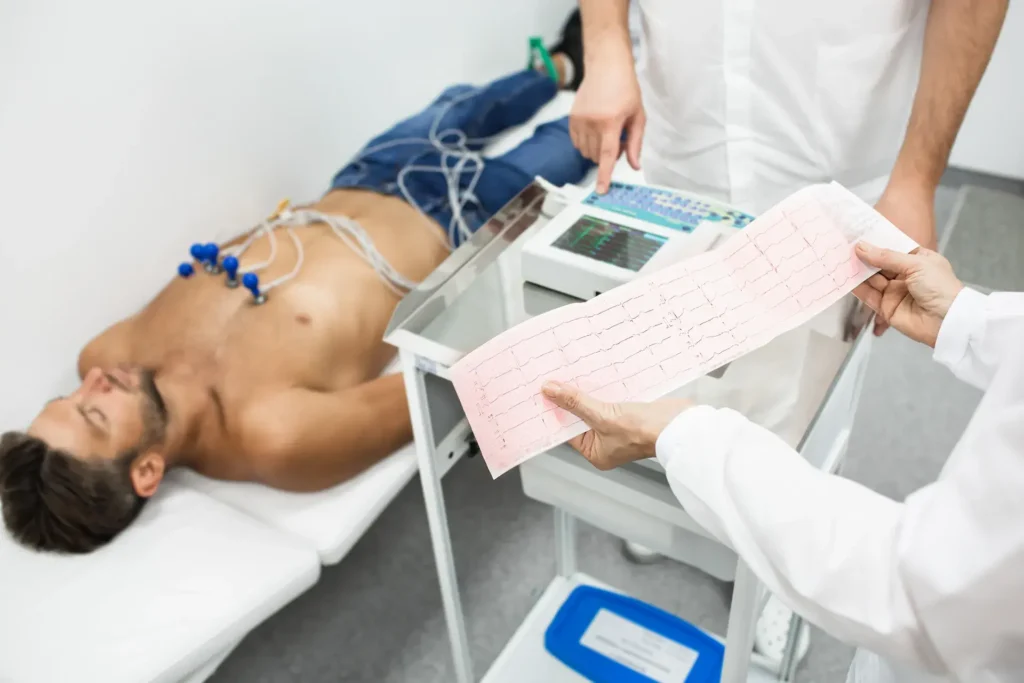
• Heart, lung, and neurological checks
• Review of medical history
• Diabetes, sleep disorder, and medication screening
• Emotional and mental fitness evaluation
• Instant reporting to the FMCSA
• Free laminated medical card (upon request)
Mobile DOT Physicals & Drug Testing in Danbury, TX
We Come to Your Company or Job Site
Need exams for multiple drivers? Keep your business running without interruption.
Our Mobile DOT Physical & Drug Testing Unit travels directly to your location in Danbury, TX and surrounding areas.
Perfect for:
• Trucking companies
• Bus and shuttle companies
• Construction firms
• Government fleets
• Oilfield and industrial operations
Save time, reduce downtime, and keep your entire team compliant on-site.
Why Drivers in Danbury, TX Choose Us
The Fastest and Most Reliable DOT Exam Experience
Commercial drivers trust us because we make the process fast, simple, and stress-free.
Reasons Drivers Prefer Our Clinic:
• Walk-ins always welcome
• Open extended hours
• Certified Medical Examiner on staff
• Exams completed in 45 minutes or less
• Instant FMCSA reporting
• Affordable pricing with no hidden fees
• Free laminated medical card available
• Friendly staff who understand CDL requirements
• Convenient location close to major highways
We’ve helped thousands of Texas drivers stay compliant — and we’re ready to help you too.
Serving Danbury, TX and Surrounding Areas
Local, Convenient, and Easy to Access
Our services cover Danbury, TX and nearby communities, including:
Whether you’re coming from a local trucking company, training school, or employer facility, your visit will be quick, easy, and efficient.
Drivers must be able to perceive what is known as a “forced whisper” at a distance of 5ft or less, with or without a hearing aid. This standard equates to an average hearing loss in the better ear of less than 40 dB.
Drivers are required to have at least 20/40 acuity in each eye with or without correction. They are also required to have at least 70” peripheral in the horizontal meridian, measured in each eye.
The certified medical examiner will check the driver’s blood pressure and pulse to look for high blood pressure and irregular heartbeats.
49 CFR 391.43(f)
An individual whose BP is less than 140/90 and it’s on antihypertensive medications may be certified for one year. An individual diagnosed with Stage 1 hypertension (BP is 140/90 – 159/99) may be certified for one year. At recertification, an individual with a BP less than or equal to 140/90 may be certified for one year; however, if his or her blood pressure is greater than 140/90 but less than 160/100, a one-time certificate for three months can be issued. An individual diagnosed with Stage 2 hypertension (BP is 160/100 – 179/109) should be treated and a one-time certification for 3-month can be issued. Once the driver has reduced his or her BP to less than or equal to 140/90, he or she may be recertified annually thereafter. An individual diagnosed with Stage 3 hypertension (BP greater than 180/110) should not be certified until his or her BP is reduced to less than or equal to 140/90, and may be recertify every six months.
A urinalysis is required. The test looks for indications of underlying medical conditions such as diabetes.
The physical exam will cover a dozen different categories:
- General appearance
- Eyes (cataracts, glaucoma, macular degeneration, etc.)
- Ears (scarring of tympanic membrane, perforated ear drums, etc.)
- Mouth and throat (to look for problems breathing or swallowing)
- Heart (murmurs, extra sounds, pacemaker, etc.)
- Lungs and chest, not including breast examination (abnormal breathing, impaired respiratory functions, cyanosis, etc.)
- Abdomen and Viscera (enlarged liver, viscera, muscle weakness)
- Vascular (abnormal pulse, carotid, varicose veins)
- Genito-urinary (hernias)
- Extremities (limb impaired)
- Spine, other musculoskeletal (previous surgery, limitation of motion, tenderness, etc.)
- Neurological (impaired equilibrium, coordination or speech pattern, ataxia, asymmetric deep tendon reflexes)
A DOT physical can only be completed by a qualified medical examiner certified by the FMCSA. It is up to the Medical Examiner to determine if a candidate meets all the requirements, and to mark the report to the best of their knowledge.
Texas DOT Physicals Form
There are several forms associated with DOT physicals.
These forms are available online, so that drivers and employers can review them before a visit — they include:
Insulin-treated Diabetes Mellitus Assessment, MCSA-5870
Commercial drivers with insulin-treated diabetes must have this form completed by their treating clinicians no more than 45 days prior to examination by a certified medical examiner (CME). A Medical Examiner’s Certificate can’t be issued to the driver without this form.
An individual with Non-Insulin-Treated Diabetes Mellitus can be certified for 2 years maximum, if they are WITHOUT a history of hypoglycemia episodes for the past 12 months or a history of seizure, loss of consciousness, coma or need of assistance from another person in the last 5 years.
The process for the certification of the driver with Insulin-Treated Diabetes Mellitus starts with The Treating Clinician, defined as the healthcare professional who manages, and prescribes insulin for, the treatment of the driver’s diabetes. Drivers with Insulin- treated diabetes mellitus must provide to the treating clinician at least the preceding 3 months of electronic blood glucose self-monitoring records while being treated with insulin to be eligible for the maximum 12-month certification.
The treating clinician must complete the Insulin-Treated Diabetes Mellitus Assessment Form, MCSA- 5870, Insulin-Treated Diabetes Mellitus Assessment Form MCSA-5870.pdf (283.65 KB) attesting that the driver maintains a stable insulin regimen and proper control of diabetes. Upon completion of this form, the treating clinician must sign and date the Form and provide his or her full name, office address, and telephone number on the Form.
The certified medical examiner must receive the form and begin the medical examination no later than 45 days after the date on the signed form; however, the medical certification determination does not need to be completed within 45 days.
The Medical Examiner must retain this form as part of the Medical Examination Report Form.
The medical examiner, utilizing his or her independent medical judgment, determines whether the driver meets the physical qualification standards in 49CFR391.41 to operate a commercial motor vehicle.
The driver is not physically qualified to operate a commercial motor vehicle if he or she is not maintaining a stable insulin regimen and not properly controlling his or her diabetes.
The driver with Insulin-treated diabetes mellitus may be certified for up to a maximum of 12 months, meaning an annual or more frequent exam by a certified medical examiner.
If a driver does not provide the 3 months of records, the medical examiner has discretion to grant the driver up to but not more than a 3-month certification, to allow time for the individual to collect the necessary records.
Once the individual has 3 months of blood glucose self-monitoring records, the individual is treated the same as an ITDM driver with 3 months of records.
For additional information, please visit www.fmcsa.dot.gov.
Talk to Dr. Davis’ office to learn more about Texasdotphysicals.com, or call
832-328-8811 for more information o set up an appointment.
Drug & Alcohol Screening
What CDL Drivers Need to Know
The United States Congress recognized the need for a drug and alcohol free transportation industry, and in 1991 passed the Omnibus Transportation Employee Testing Act, requiring DOT agencies to implement drug and alcohol testing of safety-sensitive transportation employees. 49 CFR Part 40, or Part 40 as we call it, is a DOT-wide regulation that states how to conduct testing and how to return employees to safety-sensitive duties after they violate a DOT drug and alcohol regulation.
Texas DOT Blog

Understanding DOT Physical Requirements in Houston, Texas
The Department of Transportation (DOT) determines the physical requirements necessary to ensure that commercial vehicle operators in Houston, Texas, are fit for duty. Understanding these requirements is essential for anyone looking to obtain or maintain their commercial driver’s license (CDL).

DOT Physicals 101: What Every Commercial Driver Should Know
For commercial drivers, health isn’t just a personal matter—it’s a professional one.Meeting the physical demands of long hauls, early mornings, and late nights means staying road-ready, and a DOT physical ensures you’re fit for the challenges of the road. Think

Essential Information on DOT Drug Testing for Safety-Sensitive Ro
In the transportation industry, safety is a priority—that’s why DOT drug testing is important. These tests help the Department of Transportation (DOT) to make sure that those involved in safety-sensitive roles are fit for duty. Imagine being responsible for transporting